
Long-Term Rock Chip Prevention with Professional PPF: The Ultimate Guide to Paint Protection
March 16, 2026
If you've ever noticed tiny chips and scratches on your car's paint after a drive down the highway, you are not alone. Rock chips are one of those frustrating, unavoidable annoyances that slowly wear down your paint job. Paint protection film (PPF) serves a critical role by providing a transparent barrier that helps safeguard your vehicle’s paint from everyday road hazards. In this guide, we will break down how professional PPF works, why it lasts longer and protects better than other options, and everything a car owner should know before investing.
What Is Professional PPF?
Professional paint protection film offers highly effective long-term protection against rock chips by acting as a durable, impact-absorbing barrier that shields your vehicle's paint from debris. When installed by experts using high-quality films, PPF can last 7 to 10 years while maintaining clarity and self-healing minor scratches, significantly reducing the need for costly paint repairs over time.
Benefits of Professional PPF
Professional PPF acts as a powerful shield that absorbs impacts from flying rocks, gravel, and debris encountered every day on the road. Unlike thinner coatings or waxes that only guard against fading or light scratches, premium PPF is made from durable polyurethane designed specifically to stretch slightly upon impact. This elasticity allows it to disperse the energy from small collisions, preventing chips and abrasions from reaching the car's paint beneath.
The practical effect is significant: fewer visible chips, less need for touch-ups, and a much longer lifespan for your vehicle's original paintwork. Because PPF functions as a sacrificial layer, it takes damage instead of your paint. Even at highway speeds, the molecular structure of professionally applied film can absorb considerable shock.
This means that when your vehicle faces hazards in construction zones or gravel roads, the film's robust barrier dramatically reduces long-term wear. Over time, this translates into tangible savings through less frequent repainting and a reduced risk of rust or corrosion forming where chips would otherwise expose bare metal.
Self-Healing Properties
Many high-end PPF products today feature advanced self-healing technology within their thermoplastic polyurethane layers. Minor scratches and swirls that might permanently mar other coatings are not an issue here. Exposure to natural sunlight or gentle heat activates the film's ability to heal itself within one to two days, meaning everyday imperfections gradually vanish without any extra effort on your part.
This self-renewing quality helps maintain both functionality and appearance even after years of use. Vehicles protected with quality PPF consistently maintain a fresh, well-kept look long after installation, a level of convenience and peace of mind that few alternatives can match.
Enhanced Aesthetic Appeal
While the primary goal of PPF is protection, it also offers customization options that let you tailor your vehicle's appearance while preserving its paint. Clear films allow your original color to shine through without yellowing or discoloration over time, thanks to UV-blocking additives. Matte or satin finishes can create an understated elegance, while glossy finishes amplify depth and shine.
Many drivers find this flexibility appealing because they can enjoy both functional benefits and aesthetic upgrades in one solution. PPF also maintains clarity under ceramic coating treatments, so you do not have to sacrifice shine for protection.
Preventing Rock Chips and Scratches
Paint protection film delivers physical impact resistance by absorbing kinetic energy from rocks or gravel. Its sturdy polyurethane material stretches slightly on impact, dispersing force so that the paint underneath remains intact even when struck by stones at highway speeds. Think of it like a phone screen protector: you accept minor scratches on the protector to save the actual screen. The film takes tiny abrasions and chips so your car's paint does not have to.
Not all parts of your car are equally vulnerable. The front bumper, hood's leading edge, side mirrors, fenders, and rocker panels are prime targets for rock chips because they face airflow and flying debris most directly. Applying PPF to these areas maximizes protective benefits while managing cost, making it a smart strategy, especially for drivers who spend significant time on highways or roads prone to loose gravel and construction zones.
It is also worth noting that PPF's effectiveness depends not only on the quality of the film but also on how well it adheres during installation. Proper application ensures seamless coverage without bubbles or lifted edges where debris could compromise protection. Trusting certified professionals to install the film guarantees this level of precision.
The PPF Installation Process
The first step in installing PPF is thorough surface preparation. Any dust, oil, wax, or grime left behind will interfere with the film's ability to bond properly. This means starting with a wash to remove loose dirt, followed by a degreaser wipe-down to strip away residual oils. Many installers also use a clay bar to remove embedded contaminants invisible to the eye but capable of disrupting adhesion.
Measuring and cutting PPF requires precision. Many professionals use pre-cut kits tailored for specific car models, which minimize errors and speed up installation. For more detailed panels or custom jobs, installers hand-cut film using templates, ensuring every curve and edge is perfectly covered.
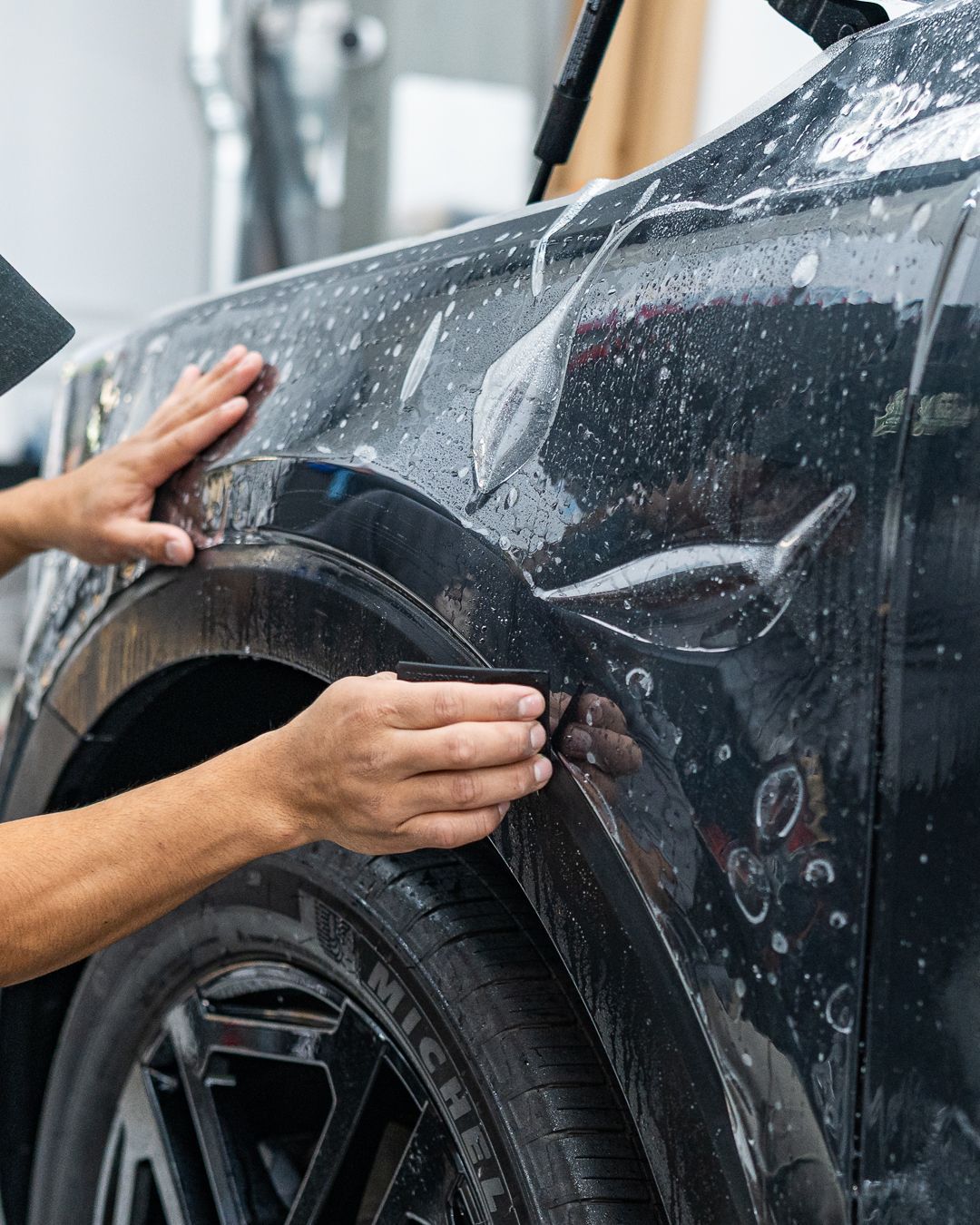
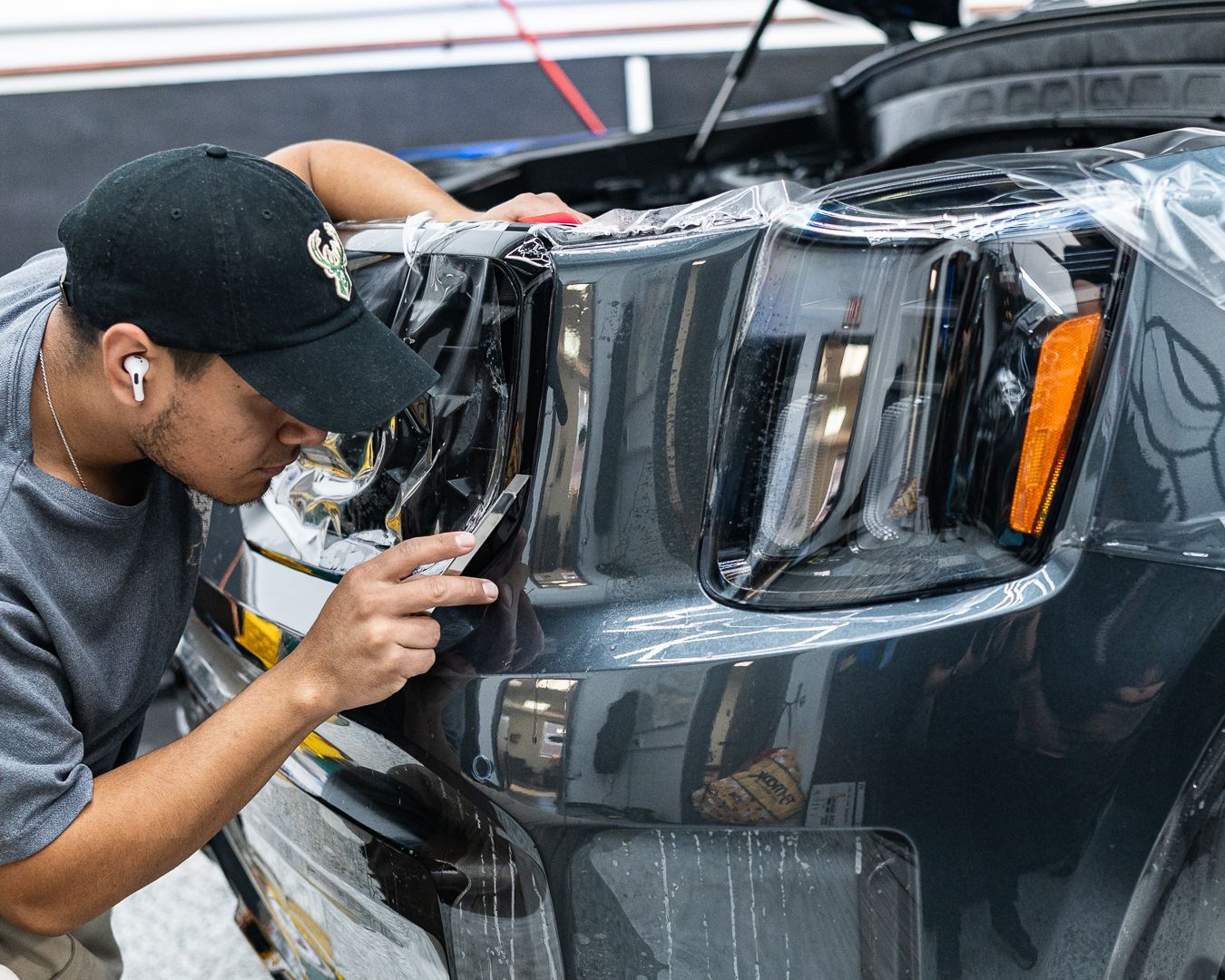
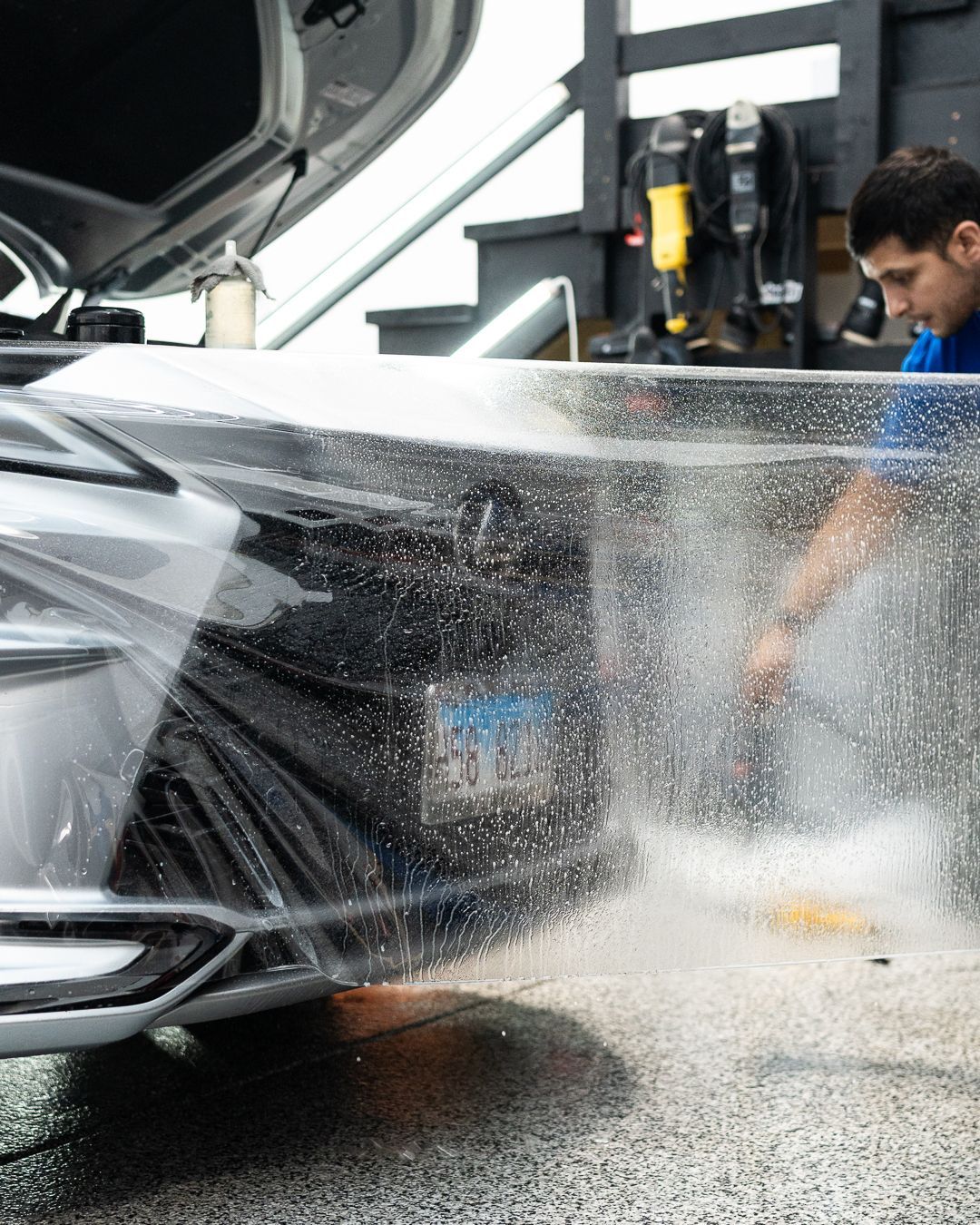
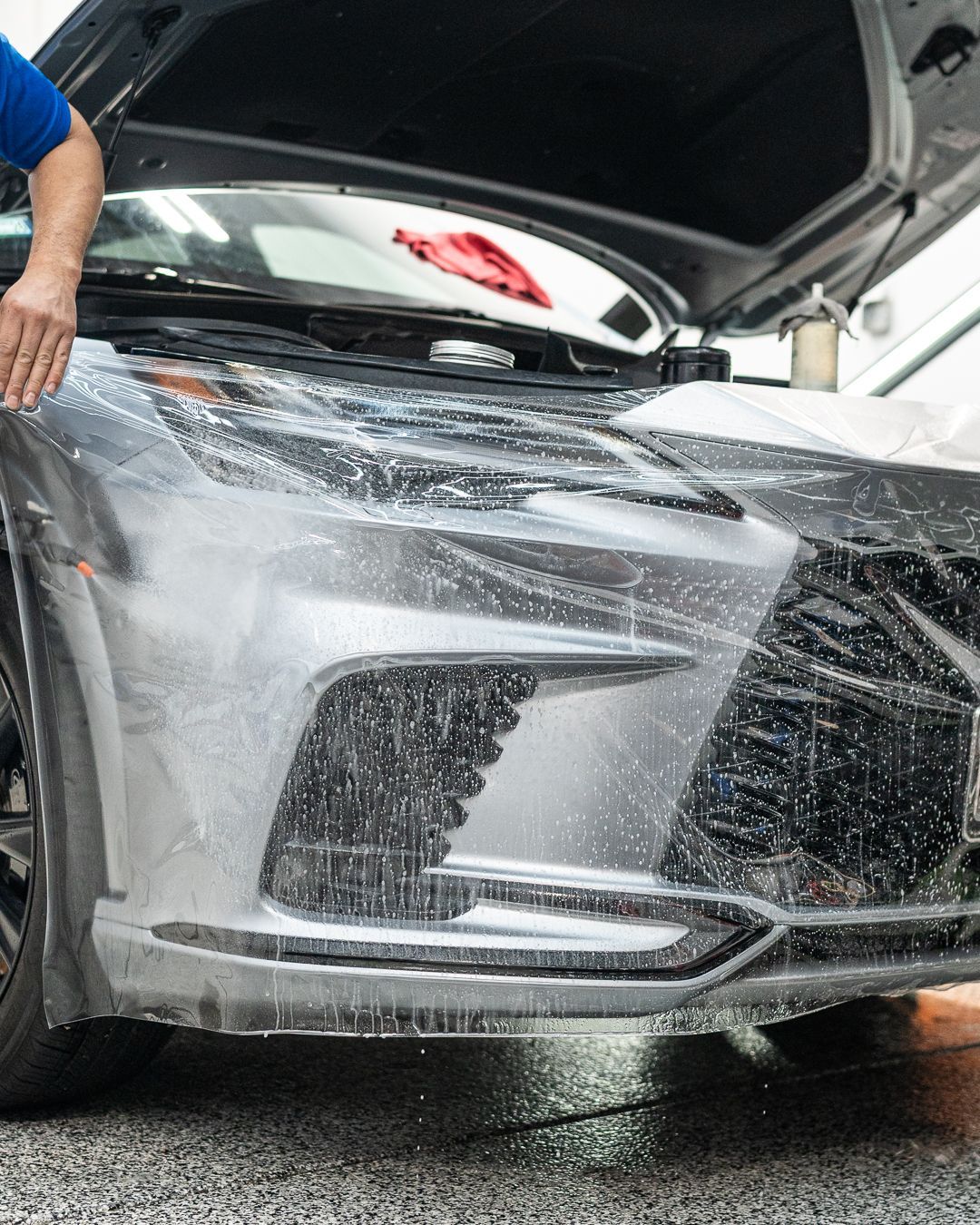
Applying the film involves slip solutions that allow installers to position the film before pressing it down. Specialized squeegees are used to push out air and moisture from the center outward, while heat guns or steamers help conform the film over complex curves and edges. Once everything fits smoothly, the film requires a curing period of 24 to 48 hours during which the adhesive sets fully. During this time, owners should avoid washing their cars or exposing them to excessive moisture.
DIY vs. Professional Application
DIY paint protection film kits are available at a lower upfront cost, but this difference reflects expertise, tools, and experience that directly affect the final result and longevity of the film. Applying PPF requires precise alignment, careful stretching, and smoothing out all air pockets, none of which is easy without specialized equipment. A significant portion of DIY installations result in visible imperfections such as bubbles, lifted edges, or uneven adhesion that compromises protection.
DIY kits also often come with thinner films lacking advanced features like self-healing coatings or UV resistance. This can cut their lifespan roughly in half compared to professionally applied films. When factoring in early replacement costs due to wear or faulty installs, the initial savings often diminish considerably.
Professional application, on the other hand, brings methodical precision that minimizes errors. Certified technicians wrap edges seamlessly around curves and panels, keeping protection invisible and intact over time. Reputable shops also provide warranties covering issues like yellowing or bubbling, something rarely offered with DIY kits.
Maintaining Your PPF
Keeping your PPF in prime condition requires consistent but simple care. Use gentle, car-safe shampoos with a neutral pH, and wash with a soft microfiber cloth. Avoid abrasive brushes or rough towels that can introduce micro-scratches. Hot water above 40 degrees Celsius can soften or distort the film, so lukewarm water is recommended. After washing, dry with a clean microfiber towel to prevent streaks.
After installation, avoid washing or waxing your car for at least 48 hours to allow the adhesive to set properly. For minor scuffs, a hairdryer on low heat held at a safe distance can activate the film's self-healing properties. Deeper cuts or lifted edges should be addressed by a professional to avoid further peeling or discoloration.
Regular monthly inspections under good lighting help catch issues like bubbling or edge lifting early, extending the life of your film significantly. Adding a ceramic coating layer on top of your PPF further boosts its performance by improving water repellency, UV resistance, and ease of cleaning.
Paint protection film is one of the most effective ways to preserve your vehicle's paint against the daily hazards of the road. From its impact-absorbing polyurethane construction to its self-healing capabilities, professionally installed PPF offers long-term protection that pays for itself over time. With proper selection, expert installation, and routine maintenance, your vehicle can maintain a pristine appearance for years to come.
Professional PPF Services in Carol Stream, IL
Keep your vehicle ready for daily driving with
professional paint protection film services from D'Andrea Detail | PPF • Ceramic Coating • Window Tint. Their expertly applied PPF helps defend high-impact areas from rock chips, debris, and long-term wear while maintaining a smooth, seamless finish. With precise installation and premium materials, you can drive with confidence knowing your paint is covered where it matters most.
Schedule your PPF service today and give your vehicle reliable, long-lasting defense in Carol Stream!
